Current Context
LZF operates within a philanthropic landscape that is undergoing significant change, and the need for the kind of trust-based, relationship-centered funding that defines LZF’s model has never been more important.
Across the country, small and grassroots organizations working on social and racial justice face growing challenges: a difficult funding environment, shifting political priorities, reduced federal investment in community-based programs, and a philanthropic sector unsure about how to reduce transactional grantmaking practices in favor of transformational investments.
Drawing from data compiled by LZF staff from studies of the state-of-the-nonprofit sector, there is plenty of reason for concern. Recent field research indicates that only 43% of U.S. nonprofits ended fiscal year 2025 with a surplus, while 69% experienced funding reductions and over 30% reduced staff size. 39% of nonprofits reported a deficit in FY25, up from 22% in FY22. At the same time, over 90% of nonprofit leaders report concerns about staff burnout, highlighting the strain on organizational capacity.
Against this backdrop, LZF grantee partner organizations demonstrate unusual resilience. Compared to sector benchmarks, LZF-supported organizations are significantly more likely to maintain financial stability, with 63% reporting a surplus and only 8% reporting deficits. Despite operating in high-need, community-based contexts, 87% of grantee partners expanded programming in response to increased demand, while only 2% reported reductions in services. These findings suggest that LZF’s approach through investing and supporting grassroots organizations enables both financial health and programmatic growth, even in a more limited funding environment.
Within Greater Boston, LZF occupies a distinctive niche. While larger foundations typically require established infrastructure, multi-year track records, and extensive reporting before awarding grants, LZF intentionally funds organizations at their earliest stages when access to flexible, unrestricted funding is most transformative. The Fund’s model of multi-year grantmaking, light-touch reporting, and sustained relational engagement stands in contrast to most funders.
This context is important to consider in relation to this study and the relevance of the questions it seeks to answer. As the current political and funding climate places increased strain on the organizations LZF serves, The Fund’s role as a trusted early funder, capacity builder, and community connector becomes increasingly critical. The findings of this study offer both a retrospective account of LZF’s impact and also a basis for thinking about how to sustain and increase that impact in the years going forward.
Methodology
The study drew on three research methods, each designed to capture a dimension of LZF’s work and impact.
The Lenny Zakim Fund staff selected Julia Gittleman Ph.D of Mendelsohn, Gittleman & Associates, LLC (MGA) to design and implement the longitudinal impact study. Rae Negron from Strategy with Intention, LLC was a member of the project team and a key partner in the study.
Grantee Survey (N=94)
A 26-question survey was developed and distributed to grantee partner organizations spanning the full 30 years of LZF’s grantmaking history. The survey was designed to capture grantee organization’s perspectives on their relationships with The Fund and to assess the impact of LZF’s work across its three program areas: grantmaking, capacity building, and community building. The survey was distributed by LZF staff via SurveyMonkey and was open from January 12 to March 4, 2026. Ninety-four individuals began the survey; between 84 and 89 organizations completed the majority of questions.
Interviews (N=26)
In-depth interviews were conducted with 26 key partners to gain qualitative insight into the partnerships and relationships LZF has cultivated over three decades. Interview participants included philanthropic partners and collaborators, past and current grantee partner organizations, and past and current board members. Interviews focused on the nature and quality of LZF’s relationships, the perceived impact of its grantmaking, capacity building and community building work, and perspectives on The Fund’s role and potential within the broader philanthropic ecosystem.
Secondary Data Analysis and Historical Review
A quantitative analysis of LZF’s complete grant history was conducted to document the depth and breadth of The Fund’s grantmaking over 30 years. LZF staff coordinated an extensive data collection process covering all 431 current and former grantee partner organizations. The analysis examined grantmaking patterns year by year including total dollar amounts, number of grantee partner organizations, number of grants distributed, and average grant size, as well as multi-year grantmaking trends and total grant amounts across funding categories.
Goals of the 30-Year Longitudinal Study
This study was designed to answer three overarching questions:
Goal #1
What has LZF accomplished over the past 30 years, and how should its impact be understood and measured?
Goal #2
How do LZF grantees define success and what role has The Fund played in helping them achieve
Goal #3
How can LZF sustain and deepen its impact as it moves into its next chapter?
These questions were chosen because they align directly with three organizational priorities LZF identified at the outset of this study. First, The Fund aims to build greater organizational visibility, both to strengthen its fundraising capacity and to ensure that its distinctive model is clear and communicable to both current and new audiences. Second, LZF seeks to develop more concrete impact measures that can support its strategic plan, deepen its capacity building offerings, and support its communications with funders and partners. Third, the organization sees an opportunity to contribute more actively to philanthropic priority-setting by sharing what it has learned over 30 years in ways that advance field-level thinking about trust-based, intermediary philanthropy and capacity building for grassroots organizations.
Together, these goals frame this report as a document intended to help LZF understand where it has been, articulate what it stands for, and think clearly about where it is going.
Grantee Partner Case Study
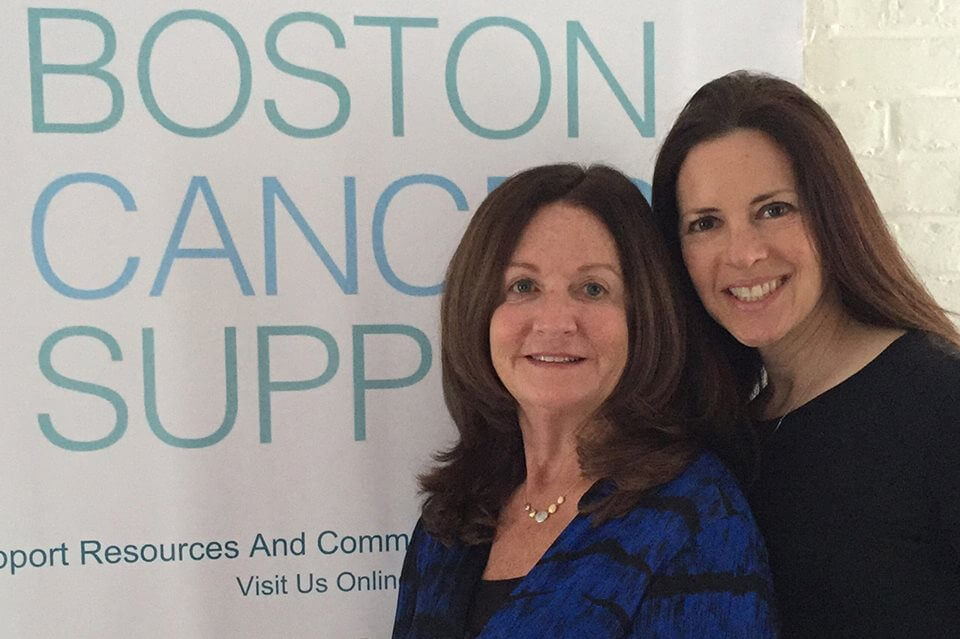
Boston Cancer Support
One-stop cancer resource from diagnosis through treatment, by way of multi-organizational collaboration. (Funded 2018-2021)
“The LZF workshops have made a huge difference in BCS’s continued goal toward autonomy. As a result of attending the meetings we have spent more time focusing on donor relations, donor stewardship and program management. The workshops have helped us become more efficient and validated the need to eventually hire part-time staff…”
Founded in 2014 by Susan Lebovits, Boston Cancer Support (BCS) was a nonprofit in Massachusetts created for the people who have been touched by cancer, whether as a patient, friend, caregiver, or healthcare professional. BCS provided information on financial aid opportunities, resources for clinical trials, free or subsidized lodging, support groups to fit various needs, and free transportation to treatments; as well as educational opportunities to patient navigators, nurses, social workers, community health workers, and organizations that supported cancer patients and their families.
LZF provided BCS with four years of grant funding totaling $27,500. BCS credits LZF’s capacity-building program with helping them make improvements.
During the course of BCS’ tenure as an LZF grantee partner, its total net assets grew from $83,729 at the beginning of 2018 to $160,935 at the beginning of 2021. By the end of 2021, BCS transferred $162,928 in its remaining total assets to the Joe Andruzzi Foundation in advance of the organizations’ merger in early 2022.
The Joe Andruzzi Foundation (JAF) was founded in 2008 by and named for former New England Patriots three-time Super Bowl-winning offensive guard Joe Andruzzi and his wife, Jen. Located in Attleboro, MA, JAF helps cancer patients and their families throughout New England through its financial assistance program as well as BCS’s Treatment Transport and Randi Friedman Wellness Programs. BCS Founder Susan Lebovits went on to found MA nonprofit Ease Into Aging, which continues to operate today.
33 Arch Street, 26th Fl. | Boston, MA 02110 | (617) 406-5945 | office@thelennyzakimfund.org
The Lenny Zakim Fund is a tax-exempt, 501(c)3 organization under the IRS. | EIN 04-3485146