DeeDee’s Cry
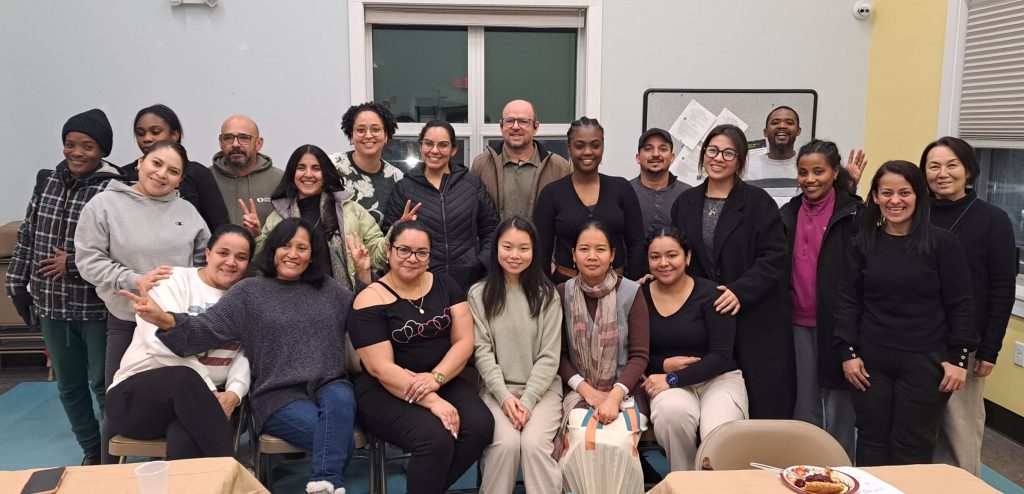
In 2017, Toy Burton posted a Facebook post in honor of her sister DeeDee’s birthday, who had died by suicide at age twenty-three. A former coworker saw her post and reached out; her brother had died by suicide that week and she was at a loss for what to do and how to get through this grief. Toy turned to the internet to look for resources and support for suicide loss survivors. “Being on the websites of those who focused on suicide prevention, I got angry because I didn’t see anybody who looked like me,” Toy shared. Based in Roxbury, she felt she needed to create something that connected her own community to suicide prevention. That year, she formed the first BIPOC focused suicide prevention organization in the Commonwealth of Massachusetts: DeeDee’s Cry Suicide Prevention and Family Support. Named for her sister, Toy added ‘cry’ to the name as she “felt like people are crying and no one’s listening.” Initially, Toy’s goal was to bring DeeDee’s Cry to different community events and establish herself and the organization as a resource. Their first event was a neighborhood Easter Egg Hunt. As she promoted her event around the community, she got pushback on folks not understanding the connection between a family gathering and suicide prevention. “The people that I wanted to reach were those who wouldn’t go to a mental health symposium. I wanted some place where people would just bring their families and be able to see what their table is about,” Toy explained. The event was a success, with attendees including City Counciler Ayanna Pressley, an early support of the work of DeeDee’s Cry. Being a suicide attempt survivor herself, Toy knew the importance of supporting others and finding community amongst those who understood the experience. She created I’m Still Here, a virtual support group for those who have considered or attempted suicide. From there, the DeeDee’s Cry network continued to grow, and Toy continued to expand her offerings, pulling from her own life experiences and from those in her community who reached out for support. Currently the organization runs seven different support groups, including Man2Man – a safe space for BIPOC men to connect and support one another; Life After Loss: a safe space for those who have lost a loved one to suicide; and Hitting Back Through Healing – a virtual support group for anyone impacted by domestic violence. Alongside their presence at community events and their ongoing support groups, the DeeDee’s Cry team serves as a LOSS (Local Outreach to Suicide Survivors) Team in the Boston-Area. LOSS Teams respond to those directly impacted by a suicide loss who are in direct need of support, guidance, and deescalation to prevent increased risk of suicide. Each LOSS team features at least one volunteer who has lost a loved one to suicide, or survived a suicide attempt themself. The DeeDee’s Cry team does everything they can when responding to a LOSS Team call, providing not just emotional comfort and healing resources, but practical support as families and individuals navigate their grief and loss. “Everybody’s support needs are different,” Toy acknowledged, “One family, their sixteen-year-old died in the house. The support they needed was help moving out of that house; they just didn’t want to stay there anymore.” They connected that family to housing support services, standing side by side with them as they navigated the relocation process. Now in their fourth year as a grantee partner of The Lenny Zakim Fund, Toy is grateful for the support that LZF has offered DeeDee’s Cry over the years. “What I love about LZF is that the funds are unrestricted, so they can go wherever we need them to go… We don’t have that flexibility with some of our other funds… [Other funders will say] we won’t pay for your men’s group, or we won’t pay for the domestic violence support… none of that is suicide prevention. But men supporting men is suicide prevention… Supporting domestic violence survivors is suicide prevention…” Toy clarified. When asked about what has makes DeeDee’s Cry accessible and impactful to their community, Toy explained their approach straightforwardly: “Consistency.” People see DeeDee’s Cry around their community; Toy places decals on her car and on her home, she posts consistently online and shares her story to those around her, community members know Toy and the rest of the team live in their own neighborhoods and are going through the same things they are. It is an organization “run by us, for us,” Toy affirmed. Through all their programming, the goal remains the same, “let people know they’re not alone.” Each February, the organization holds their Mental Health While Black Summit, where folks share their stories of survival, recovery, and happiness. “A lot of times, people think they’re the only ones going through something,” Toy disclosed. She has seen the impact that sharing stories of hope has on those who hear them and are able to realize someone else has been in their shoes before. “When I was in that frame of mind… all I could see was the hurt and pain that I was feeling… I couldn’t see the light at the end of the tunnel… I couldn’t see the life that I have now.” As they approach their tenth year in operation, DeeDee’s Cry continues to be that light for countless Bostonians and their families. ———– The DeeDee’s Cry team seeks volunteer support to support their LOSS Team efforts, as well as to share their resources and programming around communities of Boston. Learn more about the work of DeeDee’s Cry Suicide Prevention and Family Support on their website. All of their support groups are free, virtual, require no intake, and open to all.
City Strings United
Born in Boston and raised in San Diego’s inner city, Bithyah Israel grew up very aware of the differences between her life and the lives of her more affluent peers. “There’s a social benefit to being more financially stable and you pick up on that as a child… [Kids] who are doing great things are celebrated publicly. ‘This kid is an amazing gymnast, or this kid’s dad is an engineer and helped him with his project.’ You’re just constantly aware of all the ways that other people are just running past you that you have no access to,” Bithyah shared. Bithyah struggled with housing insecurity and family instability throughout her life, leaving her feeling behind many of her peers. As a young adult, she was given the opportunity to learn to play the cello, an experience which changed her life forever. She went on to participate in youth orchestras, gaining not just performance experience and recognition within classical musical communities, but a greater sense of confidence, identity, and belonging. “When I was given an instrument to learn, it was something tangible that belonged to me. The lessons were for me. Only me.” In adulthood, Bithyah felt passionate about providing access to musical education to youth growing up in cities. In 2012, she started the organization City Strings United (CSU) with a dream to give back to kids like her own younger self. She developed relationships with local community partners, like the Roxbury 12th Baptist Church and Johnson String Instruments, receiving donated space and discounted instrumental rental rates. Community members caught wind of her work and pitched in to help cover the cost of instruments for her first cohort of students. She started with twelve students for a three-month cello instruction program. Snippets from their first class are documented and preserved on YouTube, alongside clips of the audience reaction to their three-month recital. “I was trying to prove the concept and I thought that we were going to have to quit, but we never did,” Bithyah explained. Now in 2026, City Strings United serves over 100 kids annually, teaching cello, violin, upright bass, and piano. Their students perform about fifteen times a year in different iterations all over Boston. CSU’s core staff has all been with City Strings for at least a decade. City Strings United believes in music education as a vessel for youth development. Alongside the technical musical skills their students are learning, youth are able to grow immensely as individuals and as members of their community. “When you put an instrument in a child’s hand… the ownership that you’re giving a child is huge. An identity. ‘Oh, I play the cello. I play the violin. I play the piano.’ Now you’re helping them with an identity, something that they can boast about, be glad about,” Bithyah described. Students learn to collaborate in a group, to be able to practice and develop a skill, and to take pride in their own work and their sense of self. Over the years she has also witnessed the power of musical education access as a form of social capital for her students. Possessing a highly sought after skill and being part of the historically exclusive community of classical music can open a multitude of doors for a young student who may otherwise not have the financial resources to access these spaces. Regardless of their financial background, participation in their programming allows her students to show their abilities, to demonstrate their intelligence and worth, and to feel confident taking up space in spaces not always welcome to students like them. City Strings United’s place in their students’ lives is not exclusive to music lessons. “If a child that was previously interested in the program drops off the map and is no longer attending, I know something has happened,” Bithyah shared, “that’s where we make flexible scheduling or we say, ‘let’s just take a break for a month, take care of whatever you need to take care of, and you will still have a place here.’” Despite whatever may be happening in a child’s life, City Strings works to maintain a piece of consistency in their lives and continue giving them something they can hold onto through any hardships that is just for them. The organization continues to grow, not just in size, but in the depth of the opportunities they are able to provide for their students. CSU has been building paid performance opportunities for students, as well as hiring older students into an apprenticeship program. One of their original 2012 cello students is now a 30 hour a week employee of City Strings, supporting grant-writing, stage management, and more. They are working to expand outside their traditional Saturday classes to afterschool classes through a new partnership with the Boston Center for Youth and Families. Now in their fifth and final year as Lenny Zakim Fund grantee partner, Bithyah is grateful for all she and the CSU team has gained from LZF’s support, both financial and from the Fund’s dedicated staff and informative capacity-building resources. “It’s been great to have this level of investment in a young nonprofit. It’s difficult when you’re considered high risk to some funders,” Bithyah described. As they approach their 15th year of operation, City Strings is proud to have a dedicated team of leaders and teachers; a community of supporters, parents, and countless incredible current and former students; and a budget that has grown from zero to half a million dollars. Through it all – their mission has stayed the same: making sure every child has the chance to experience the joy of learning music, and to know that they are just as worthy of being a musician as any other child. —————————————————————————————- Support City Strings United at their upcoming performances, including their annual fall showcase concert, taking place on Sunday, October 25, 2026 at Roxbury Community College. To learn more about their work, visit City String’s website here, or reach out to their team via their online contact form.
Queer History Boston
In the face of continuous discrimination and marginalization of LGBTQ+ lives and erasure of queer histories, a local Boston community archive was born. Boston queer individuals and communities wanted their history and their lives preserved for future generations, but they knew they could not rely on larger local institutions to do that work – they had to do it themselves. In 1980, a small group of volunteers founded the Boston Area Lesbian and Gay History Project, known outwardly as The History Project. 46 years later, this group has become one of the nation’s largest independent LGBTQ+ archives, growing not only in the size of its archives, but into a new identity – Queer History Boston. Queer History Boston ensures the histories of Boston’s LGBTQ+ lives, relationships, and stories are preserved and celebrated, reclaiming the past while ensuring Boston’s queer history is never erased. The organization remained entirely volunteer-run until 2020, when Joan Ilacqua became QHB’s first Executive Director. Now as of 2026, the team has grown to three, including Matisse DuPont, QHB’s Director of Engagement and Advancement, as well as a full-time archivist, Mik Hamilton. When the organization was founded, volunteers chose to operate under the neutral name of The History Project as a form of protection. They were able to gain nonprofit status and operate under a non-outwardly presenting queer name, allowing them to move about the nonprofit sector with less fear of discrimination and attacks. In 2025, the organization went through a full rebrand, emerging as Queer History Boston. “From a safety perspective in the 1980s [the name] makes complete sense. But we’re in a different time and place, and we’re looking to be much more out and clear about who we are, what we do, and who we serve,” Matisse shared. Armed with a new design kit built to reference 90s queer zine, button, and flyer activist movements, and a clear, local, name, Queer History Boston hit the ground running last year to make sure the city of Boston knew about this decades-old organization. They celebrated their rebrand last October during LGBTQ History Month with an exhibit in the heart of Harvard Square, entitled ‘Cambridge: It’s always been a little queer.’ Thousands of Bostonians saw their exhibit, which felt like the perfect representation of Queer History Boston’s new era of being publicly seen, explicitly queer, and centered in local history. In 2025, the organization reached over 2000 people via their events and programming, which span from museum pop-up exhibits to author talks and film screenings to community-building events. QHB worked with over fifty other local organizations in the past year to promote queer history on larger scales and make the Boston LGBTQ+ feel seen and represented throughout the whole city. Their archival materials and work have been featured all across Boston, including by The Boston Public Library, the Mayor’s Office, and Historic New England, as well as at the national and international level in their collaborations with other community-driven history projects and organizations. “It is important to us to work closely with local aligned organizations, both to foster solidarity and challenge systematic oppression, but also to ensure that our work reaches community members, activists, and organizations who seek to understand and use our history to take action,” stated Matisse. Alongside their growing collaborative efforts, Queer History Boston’s volunteer committees have been revitalized and continue to grow, keeping the organization’s community-run history alive. As Boston heads into Pride Month, the organization has a full docket of exhibits, celebrations, and presentations. Throughout June 2026, they can be found at the Museum of African American History, the West End Museum, the Gibson House Museum, tabling at Pride celebrations across the city, including Boston’s annual Pride for the People festival, and at their physical archives in Back Bay, where they will be busy giving tours all month. Alongside that, the team is gearing up for their annual award show: The Living Archive Honors, taking place on Saturday, September 26th. This year they will be honoring five awardees, consisting of local advocates, artists, and activists who prioritize local LGBTQ+ history and work to protect and uplift queer communities across Boston, and the whole commonwealth of Massachusetts. “We’re an archive and we document things. [The awards show is] proof right now… we’re doing the act of documenting in front of you… we’re doing our mission in front of you currently… Look at these important people who are now in the archive” Matisse remarked. The awards show is not only to have a chance to celebrate their wonderful awardees, but to have a platform to show that queer history is still being made each day. The tradition of community archiving, which dates back to 1970s era grassroots liberations movements, remains incredibly important in our modern age. To this day, there are extensive gaps and distortions in the ways that LGBTQ+ communities are represented not just in history, but in the media and in everyday conversations. Through their work each day, Queer History Boston works to ensure that the lives and work of queer Bostonians will not only be preserved but be celebrated. —————————————————————————————- Current needs at Queer History Boston include new volunteers and members on their Public History, Archives Advisory, and Archives Working Group Committees, as well as support and attendance at their upcoming events and exhibits. Community nominations for their upcoming Living Archive Honors show are open now through June 8, 2026. To learn more about their work, visit their website here or reach out to their team at info@queerhistoryboston.org. To see more pieces of Boston’s Queer History, visit their Instagram, or take a look through the digital QHB archives.
Bryce’s Journey
When Michelle Jenkins’ son, Bryce, was diagnosed with Autism Spectrum Disorder (ASD) at age three, she struggled to find accessible resources and programming for her and her son. Her son needed socialization, and she searched for a social-skills group where he could play and form relationships with other children, but the only support available to her son was one-on-one therapy. Her search for a safe, welcoming, and accessible space turned up short, leading Michelle to create her own organization, Bryce’s Journey, in 2017. Bryce’s Journey, named for Michelle’s son, works to reduce disparities of care for working class families and underserved children with ASD and Attention Deficit Hyperactivity Disorder (ADHD) in the inner-city Boston neighborhoods of Dorchester, Mattapan, Hyde Park, Roxbury, and Roslindale. Their services are available on a sliding-scale fee basis, and they are committed to keeping their programming available to all who need it. For participating youth, Bryce’s Journey provides year-round support. For the majority of the year, children can attend their after-school programming where they gain a safe space to come to each day where they know they will be cared for, they will have friends to connect with, and where they are able to gain new experiences in a way that accommodates their own needs. The team takes the children on field trips, both for fun and to teach new skills. Michelle recounted stories of taking the kids to the library to practice picking out books for themselves, to the bowling alley for a fun outing, and to the swimming pool to be sure all the kids were able to swim and float to keep themselves safe. Outside of the school months, children can attend Bryce’s Journey’s summer enrichment programming that prioritizes teaching important life skills and safety lessons to increase the children’s confidence and independence. Together, they practice skills like riding the bus, checking out with cashiers at convenience stores, and learning how to keep themselves safe and look for help in public if they are ever alone. Bryce’s Journey’s work extends outside of their interactions directly with participating children. Michelle works with families to support their children’s education, serving as an advocate for families in school meetings and aiding families in creating and understanding their child’s Individualized Education Program (IEP), an important accessibility support for children with ASD and ADHD who have specific educational needs. The organization also provides guidance, informational resources, monthly support groups, and educational workshops for parents and caregivers. At the beginning, Michelle was just renting space where she could find it, often at local community and health centers. In 2024, Bryce’s Journey finally began renting their own space in Hyde Park, which can accommodate twelve children and four adults. To this day, they rely heavily on word-of-mouth to share their services and programming with families who need it. Michelle has worked to get to know members of her community, learning what resources other families like her own are seeking and how she can best support them. Despite their successes and the impact Bryce’s Journey has made on countless children and parents, they are still in need of support. They have outgrown their space and are searching for a larger space that can meet Early Education and Care (EEC) standards, while remaining affordable and accessible. They are also searching for partnerships with other organizations and with the Boston Public School system to be able to broaden the reach of their impact. This year marks Bryce’s Journey’s fifth and final year as a grantee partner of The Lenny Zakim Fund. Not only has the funding provided by LZF been immensely helpful in allowing the organization to offer their programming at little to no cost to working families, with LZF’s help Michelle has been able to grow as a leader and nonprofit executive. In the past five years, she has taken advantage of many of LZF’s seminars, trainings, and consulting opportunities and conveyed gratitude for all that she has learned, as well as the connections she has been able to form with LZF staff and board members. “I don’t feel like a number. LZF gets it,” Michelle expressed. Nine years after funding Bryce’s Journey, Michelle shared that they are still the only organization offering the wrap-around services and support that they do. Moments of learning that may seem small to those who do not have a child with ASD or ADHD in their life, are recognized as huge moments of celebration to the team at Bryce’s Journey. Where we may see a young child going to the post office and simply dropping a letter off, Michelle tells the story of a child who has learned to cross the street safely themselves, who identified a task and was able to complete it, and who was able to comfortably interact with a post office worker all on their own. The team behind Bryce’s Journey has continued to grow, allowing them to help more families in the way that Michelle herself needed help over a decade ago. To Michelle, the clear sign of success is in the love the children have for the organization; “The children love the space, they feel safe. School can be very difficult for children with disabilities, but here they know everyone is there to be their friend.” ——————————————————————————————- Current needs at Bryce’s Journey include support with finding a new, larger EEC certified space for their expanded programing, partnerships with similar organizations, and funding/donations. To learn more about their work, visit their website here or reach out to Executive Director Michelle Jenkins at brycesjourney@outlook.com.
Lamplight Women’s Literacy Center
While teaching an adult GED class, Lisa Chiulli Lay came to learn that many of her students already had high school diplomas. These students were primarily healthcare workers who had immigrated to the United States and were hoping to improve their literacy skills in order to attend nursing school, but the only program available to them to aid in the development of their English language abilities were GED classes. Across her professional and personal life, Lisa met countless women just like those in her class. Lisa reflected on “older women who were working so hard to build better futures for themselves and their families, but against incredible odds. They were taking care of their families; they were working many hours at their own jobs; they had very little financial security or resources to draw on…. yet they were still trying to take advantage of any educational opportunity they could and holding onto the ambition of a future nursing career.” Funding constraints cause the adult education space to often be very one-size-fits all; leaving students without access to high quality, flexible, and tailored resources and programs that will allow them to meet their own career goals. This is particularly the case for immigrants from other countries, many of whom possess the educational background, but lack proficiency in English. With her background in education, public policy, and nonprofit program design, she was inspired to found Lamplight Women’s Literacy Center in 2022 to meet the needs of her neighbors. Based in Arlington, MA, Lamplight provides adult educational programs that serve low-income workers and jobseekers based directly on needs assessments of community members. Their ESOL (English for Speakers of Other Languages) classes run four nights a week at three different levels of English Instruction. This program began at a local state public housing development in Arlington and was requested specifically by the residents. As the organization has grown, the classes have opened to income eligible participants across neighboring towns, in addition to residents of the development. Lamplight also runs their Healthcare Career Pathways program which supports Certified Nursing Assistants (CNAs) in their preparations for nursing school. The program provides four courses to prepare students for the nursing school admissions exam and offers support in English, Math, and navigating the college admissions process. Both programs also provide wrap-around support services including resume writing, job search skills, interview practice, and resource connections. In 2025, Lamplight served around 80 local students, many of whom participated in multiple courses throughout the year. Over three-fourths of participants were women, with one hundred percent of students coming from low-income houses. Lisa was proud to report that in last year’s ESOL classes, every single student who reached forty hours of learning achieved at least one literacy grade level gain. For her healthcare students, almost eighty percent met course learning objectives in a course Lisa described as challenging. Lisa is supported by three other part-time instructors, each masters-educated with over a decade of experience in adult education. “One of the hallmarks of our program and the results that we get is that quality is paramount to me in everything that we provide. If you don’t have superb teachers, you don’t get the results,” Lisa shared. However, it is not just the personalized and intelligent program design or the highly experienced instructors that make Lamplight so impactful for its students, but it is their relational and empathetic approach with each student that allows them to truly make a difference. “[We see] each student as a unique learner and get to know people at an individual level so we can be responsive to helping them with miscellaneous needs and challenges that would otherwise derail their learning,” Lisa expressed. Whether it’s something as simple as providing boots and a jacket to a student without proper winter clothing or helping a student struggling with severe pain get a well-fitted back brace to ease their discomfort, the Lamplight team prioritizes seeing their students as more than just another assignment to grade. Lisa reflected, “Our students know that if they don’t show up for class, somebody’s going to write to them and say, ‘hey, is everything okay?’ Being known is meaningful, especially in our Healthcare Pathways program. The goal of nursing school is pretty far off. And so, to have somebody continue to say, ‘you’re smart, you can do this. There are many steps. But look, first step done. Now on to number two.’ is so impactful.” Lamplight Women’s Literacy Center is currently working on a new partnership with the nonprofit Housing Corporation of Arlington. Through this collaboration, Lamplight will bring their programming to residents of 250 units of affordable housing, including 43 new units opening next fall. The team is hard at work planning their upcoming needs assessment for their new participants, working to guarantee that their classes will meet the needs of all residents, and that students will continue to feel as if Lamplight’s classes are tailored to their own learning goals. As Lamplight continues to grow, Lisa remains grateful for the support of The Lenny Zakim Fund, as well as the resources and capacity-building trainings and opportunities she can access as an LZF grantee partner. “LZF contributed very early on in the infancy of our organization. I cannot over emphasize how that encouragement translates into even more determination and permission for us to envision a little bit more boldly. It’s one thing to have an idea personally and you know it can work, and you believe it is necessary, but it’s another thing if someone else says, you’re not crazy, that’s a great idea, go for it,” she asserted. Her students, and “their belief in their own dreams, and their dogged pursuit of those dreams” despite the pressures they face each day continue to inspire Lisa, who is now four years into running the organization. The drive, passion, and care that Lisa and the rest of her team put into that work is clear not just in the impressive educational impact they make, but in the relationships they have formed and the community of learning, love, and light they have built. ——————————————————————————————- Current needs at Lamplight Women’s Literacy Center include support with their upcoming needs assessment for their expanded programing and funding/donations. To learn more about their work, visit their website here.
Sisters Unchained
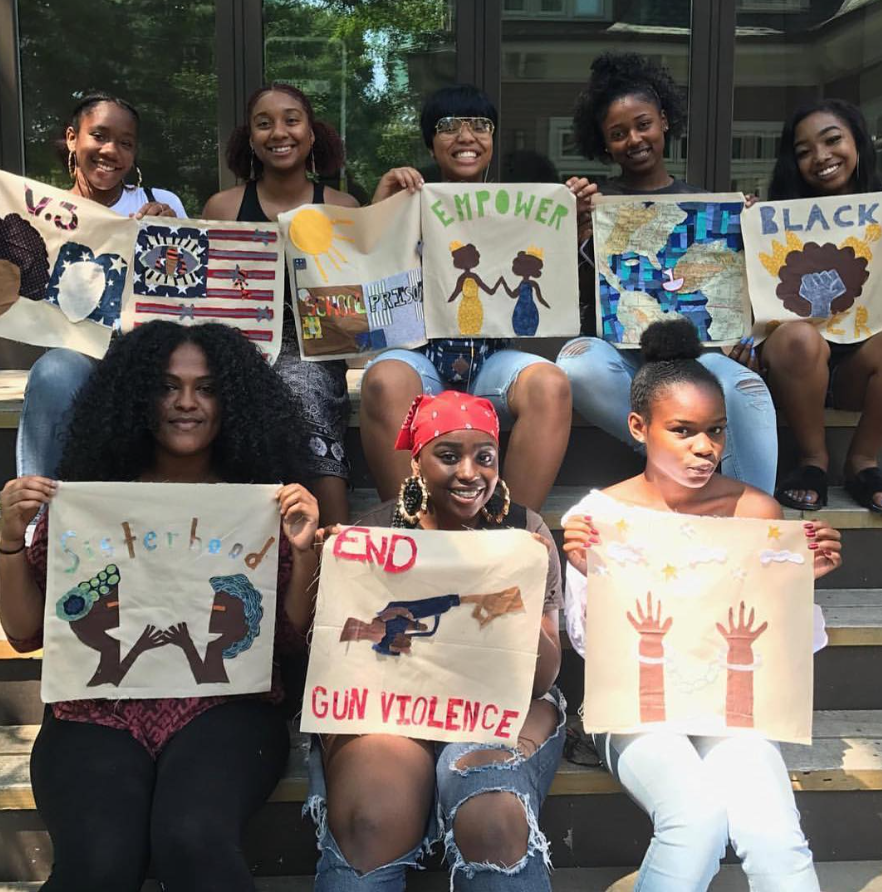
Vanessa Ly met Ayana Aubourg in the summer of 2015 during a pilot project created by incarcerated mothers for girls impacted by familial incarceration. Both held experiences with the justice system themselves, with Ayana having grown up with an incarcerated father, and Vanessa being involved with the justice system herself. The project brought together a group of young, justice-involved women. They saw potential in the program, and by the end of the summer, they had taken leadership, created their own curriculum, and built a six-week summer intensive for young women and girls in Boston, naming themselves Sisters Unchained. Their first summer cohort consisted of three young women, two with incarcerated parents, and one who had been involved in the justice system herself. Their cohort doubled in size in year two from three girls to six. Now, ten years later, a typical cohort consists of twenty-five youth. Known as the Transformative Leadership Program, Sisters Unchained brings together youth with incarcerated parents to improve mental health, develop political and self-awareness, and foster artistic expression through visual arts, poetry, digital media, and other mediums for creative outlets. The team leads workshops on processing the challenges, grief, trauma and compassion that may come with having an incarcerated parent, as well as informational sessions that help youth gain a deeper understanding of the history of the prison system, and how current policies shape them and their families’ experiences. At the beginning, Vanessa thought it wouldn’t become anything more than a summer passion project. The team loved the relationships they were building with the participating girls, but they all had other jobs, and had no idea what it would take to establish a nonprofit. As the years passed, the girls who had been with them since the start were approaching high school graduation and in need of more support to navigate this transitionary period. “We were their only support system at this time, so we were faced with the task of helping them fill out college applications and navigating financial aid. We ended up driving them to school and trying to raise some money to take them dorm shopping and help them get settled,” remembered Vanessa. Around this time, Sisters Unchained had begun receiving funding from The Lenny Zakim Fund in 2018. It was in joining the LZF community and forming a relationship with former LZF Executive Director Jude Goldman, that the idea of establishing Sisters Unchained as a nonprofit formed. Jude pushed them to file for 501c3 status and stabilize their programming, allowing them to be better able to advocate for and support their growing community of youth. LZF’s support proved to be invaluable. “The girls kept coming back and we kept growing and they needed more,” Vanessa shared, “I went to every single Zakim class that was offered. I met with Jude and she taught me how to do a budget and gave me pointers on what to say to donors and how to make asks.” Since gaining 501c3 status in 2020, the organization has continued to evolve. Alongside their summer intensive program for young women aged 14-18, Sisters Unchained has now launched Sister Legacy – a two-year program for high school juniors and seniors who are members of Sisters Unchained. They provide mentoring, weekly after school drop in spaces, and support with higher education or creating a plan for after graduating high school; as well as a stipend. The newest development is the Sister Legacy mentorship program – students are paired with accomplished women in Boston who mentor them through their last two years of high school and provide another resource and place of support. Graduates of the Sister Legacy program can also return as peer facilitators and remain an active part of the community. Speaking about one of her graduated students, Vanessa said, “She can still come and be with us. She has security and a constant place she can come to, since everything else moves and shifts in her life.” This student continues to work as a peer facilitator with Sisters Unchained, supporting younger girls just as Vanessa and Ayana have supported her. Ten years in, it has not always been easy for Sisters Unchained. Like many other grassroots organizations, this past year has brought funding challenges. With widespread funding cuts, there often is just not enough financial support to go around. Through this, the team is grateful for the support of their volunteers, who are hosting a fundraiser series and getting the word out about Sisters Unchained. The organization has changed so much from Vanessa and Ayana’s initial summer program. A small four-week workshop series has become so much more – girls have access to year-round programming, opportunities to engage in workshops covering everything from political education to mindfulness to entrepreneurship, as well as art-making, writing, and field trips that foster creative expression and collective healing. Despite all that has changed and evolved, the love and care that Vanessa and the rest of the Sisters Unchained team bring to their work remains the same as it was that first summer. “We keep them in our community. We love them, and they want to stay and they keep showing up… I don’t have any siblings, but we would take [the girls] with us when we went somewhere, like little sisters.” ——————————————————————————————- Current need at Sisters Unchained include funding and donations and collaborations with other organizations working in similar spaces. To learn more about their work, visit their website here.
Vòng Tay Cha Mẹ Việt (The Circle of Vietnamese Parents)
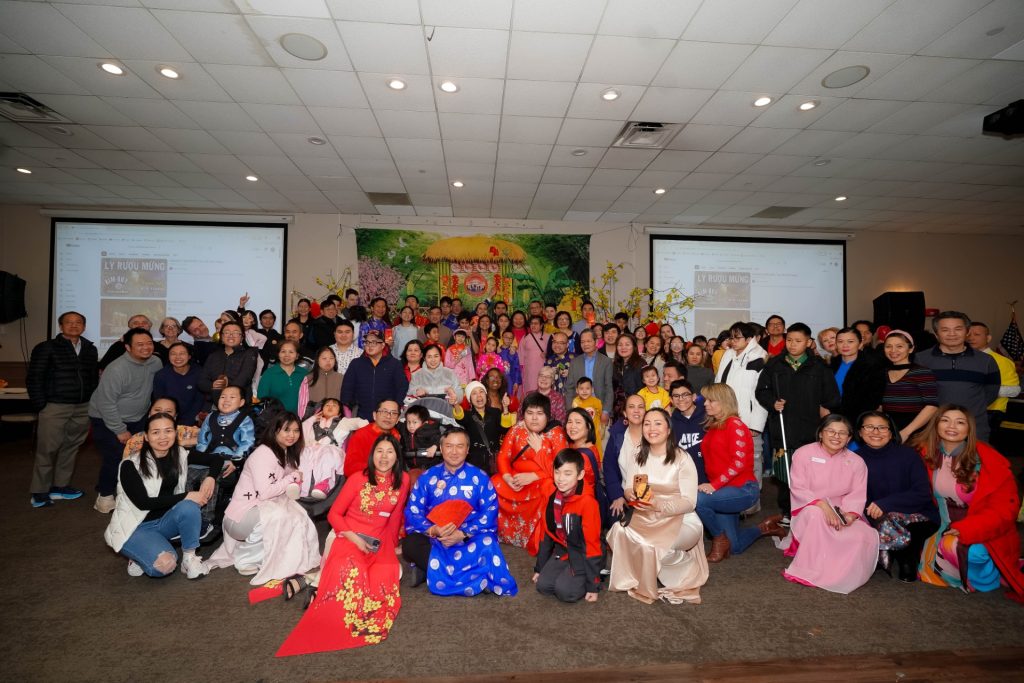
When Oanh Bui immigrated to the United States in 2006 from Vietnam as a single mom of a daughter with multiple disabilities, she struggled to navigate the American special education system. She searched out parental support groups, finding none for Vietnamese parents, or with any resources in Vietnamese. Oanh needed not only technical support in getting her daughter adjusted to life in a new country, but also social support, both for her daughter and for herself. “It can be really lonely having a child with disability within the Vietnamese community because of the social stigma,” Oanh reflected. Working alongside a few other parents she met in her community, Oanh began to develop bilingual resources for other families just like her own, foster relationships with fellow Vietnamese parents, and create spaces for youth and family socialization allowing children with autism and disabilities to feel a part of a community. In 2017, she took these lived experiences with special education laws, public school systems, and parental rights and founded Vòng Tay Cha Mẹ Việt (The Circle of Vietnamese Parents or VTCMV). Not only does the organization serve as a support group and social outlet for parents and families, the VTCMV team works directly with families and schools to mitigate issues they are facing. This includes supporting Individualized Education Program meetings, providing resources ranging from guardianship laws to disability accommodations, and helping parents communicate with schools across language and cultural barriers. One single dad lacked information on how to help his son with autism. His family denied his son’s diagnosis, fearing the stigma that comes alongside having a child with a disability. Fortunately, he found the Circle of Vietnamese Parents in their early days and was able to access information in a language he understood, enabling him to advocate effectively for his son’s appropriate services, and to develop skills needed to share his family’s journey. Now, ten years later, he is still involved with VTCMV, working with other parents who are struggling with the same issues he once faced. “He first came in as the person learning new things… and now he is a leader, coming back to help other parents,” shared Chau Nguyen, who serves as VTCMV’s Executive Director. Much of their advisory team consists of original members of Oanh’s support group who have gone through training, grown into leaders and advocates, and continue to welcome new parents into their VTCMV community. VTCMV has grown from a support group of a few families, now reaching over four hundred families in Massachusetts. Since 2020, VTCMV has begun providing weekly online gatherings, allowing the organization to reach a larger audience nationwide and provide accessible, much-needed support to Vietnamese families. To better equip families, the organization started inviting experts from various fields to provide relevant bilingual workshops related to special education, healthcare access, mental health, self-care, and parental rights that center cultural values. Chau is particularly proud of VTCMV’s youth inclusion programming, which provides space for Vietnamese youth both with and without disabilities to engage together. “Our kids have abilities, just like other ones. They can have fun; they can go to school; they can go to the movies. We’re fostering an environment where all of them can feel like they belong,” reflected Chau. Similarly, their annual community events (including family picnics, holiday gatherings, and cultural celebrations) allow all types of families to gather together and feel connected to their own culture, and to each other. Since becoming a Lenny Zakim Fund grantee partner in early 2025, the VTCMV team has been taking advantage of LZF’s capacity-building offerings. Alongside financial trainings and seminars on organizational sustainability, they are incredibly grateful for their experience working with a legal consultant through LZF’s Catalytic Consulting program. Chau shared, “usually we have to navigate it as an executive team, we have to read the laws and interpret it ourselves. Now we feel like we have someone [who has] our back, and we can always turn back and say that we don’t understand it, can you explain it to us?” The other bonus of receiving LZF funding have been the relationships they have formed with their peer grantee partners and the collaborations that have followed. In October, VTCMV was invited by RICEMA, a Worcester-based cultural arts organization, to participate in RICEMA’s Mid-Autumn Festival and host a table to share resources and welcome attendees into the VTCMV community. VTCMV has also begun working closely with Circus Up, a Boston-area circus-arts organization, to incorporate accessible circus arts into VTCMV’s youth programming. VTCMV is planning their inclusive autism-friendly annual Lunar New Year event which will take place on Sunday, February 22 in Dorchester. This is the biggest annual event that VTCMV hope to bring community members regardless of abilities to celebrate the Vietnamese cultures. Chau and Oanh have significant plans for how the organization will continue to grow this year, but above all, they are happy to be able to continue making a difference in the lives of families in their communities. Years after founding the organization, Oanh still treasures being able to share her own personal experiences with other parents and help them navigate the system. She shared, “our team is dedicated and works diligently each day so that other parents don’t feel that they walk this journey alone.” ——————————————————————————————- Current needs at Vong Tay Cha Me Viet include funding/donations, collaborations with other organizations working with Asian communities, youth, and disability accessibility, as well as support building out an online resource platform. To learn more about their work, visit their website here.
Neighborhood Counseling and Community Services
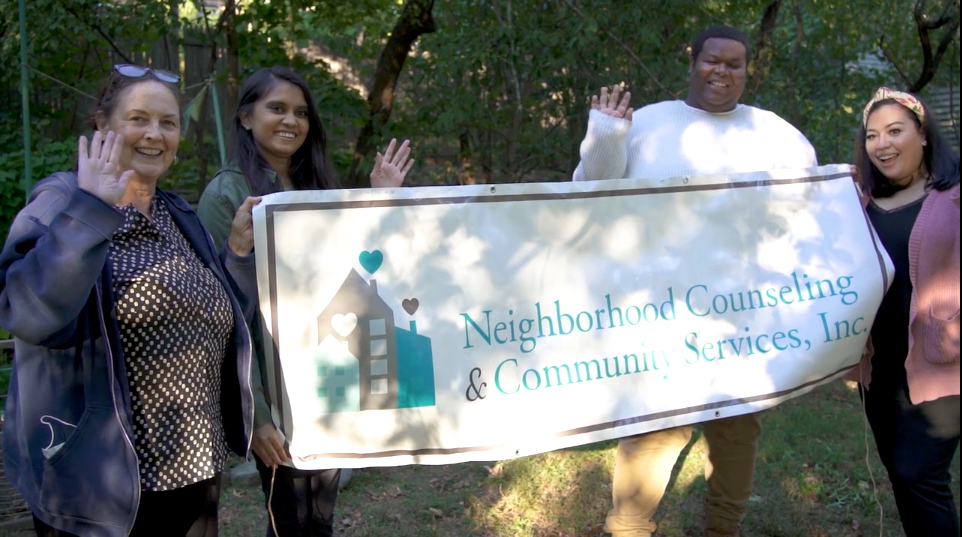
In 2015, it was as if a tsunami had hit the mental health communities of Greater Boston. All across the city, neighborhoods were struggling to find support due to the rising number of mental health practitioners who no longer accepted private health insurance and the closing of numerous community mental health centers, such as Somerville’s The Family Center. “My fellow Family Center colleagues and I saw the need to fill the gap in mental health service providers,” explains Julie Catalano, cofounder of Neighborhood Counseling and Community Services (NCCS), “and although we certainly didn’t know how to address the need, we wanted to try.” Julie has served as a part-time NCCS counselor since the organization was founded in 2015. With a staff of five clinicians, NCCS provides low- and no-cost community-based mental health counseling in multiple languages for ages 16 and up, both in-person and virtually, in group settings or one-on-one. NCCS also relies on three student intern clinicians from Cambridge College and other schools. This September, NCCS hired Ajit Baid as its first paid, part-time executive director. “What is so enticing and attractive to me about NCCS, is the opportunity to be able to help those who struggle with a mental health disorder such as anxiety or depression,” Baid says. “Having worked in healthcare all my life, I’ve seen the human impact these mental health issues have had on people’s lives.”’ Both Julie and Ajit recognize the challenges most individuals face in finding mental health counseling services, but for people who are immigrants, under-insured, or uninsured, organizations like NCCS are truly a lifeline. One student from an immigrant family was depressed and not attending high school. His NCCS counselor “was able to get him back into school, interested in classes, and making connections with other students. He became part of the community and is now pursuing a trade,” Julie reported. Another student who’d shown no interest in school, gained the confidence to pursue higher education after working with a NCCS counselor. NCCS earns revenue for their mental health counsel through a combination of fees for service and health insurance reimbursements, as well as contracts with various local schools and agencies. For the past several years, NCCS has operated out of a small, one-room space behind a local coffee shop outside of Davis Square. In addition to their regular mental health counseling, NCCS clinicians recently started offering case management services (e.g., SNAP support, housing applications) to their clients, which have been well-received. NCCS clinicians, however, are rarely paid for providing these services, despite being viewed as an essential component to their clients’ mental health treatment plans. Now with Baid leading the organization, NCCS has a new three-year strategic plan in place to solidify its niche as a local mental health provider. “It’s our vision to transform NCCS into a multi-service, mental health counseling, clinic and community wellness center,” explains Ajit. “It is important that we don’t limit our work to just providing mental health counseling, but add critical wraparound services, if we want to have a positive, long-time impact with the clients we see.” But in order for NCCS to realize its vision, it first must raise additional monies to bring Ajit on full-time, to hire an administrative assistant, and to be able to expand their clinical staff. Currently, NCCS serves approximately 100 clients through in-person and virtual counseling. Their reach is limited due to their smaller staff and inability to secure more seasoned, licensed clinicians, especially those with varied language capacity. Ajit aims to double the organization’s impact by next year, serving over 200 people, and is currently exploring new partnerships and funding opportunities. Recently, NCCS entered into a partnership with Y2Y Harvard Square, a student-run shelter for LGBTQ-identifying young adults (18-24 years old) experiencing homelessness. Next year, Neighborhood Counseling and Community Services will host a party to celebrate its 10th anniversary. “When we started NCCS, we really didn’t know what running a nonprofit would involve,” Julie admits. “Our focus was to create a place for everyone, but we were naïve about how that was going to happen and what that really involved. Maybe that was a good thing.” 2026 also marks NCCS’ fifth and final year as a grantee partner of The Lenny Zakim Fund, “LZF has really helped us understand what it means to build an organization,” Julie explains. “At the beginning I would attend the seminars about strategic planning, board development, budgeting, and finance. I would understand somewhat, but conversations with LZF board members and volunteers Deborah Seidel and Mark Irvings really helped to reinforce the learning and enabled me to implement it at NCCS. Being an LZF grantee partner really helped instill in me the importance of persistence, not giving up.” With the expansion of venture capital mental health providers into Somerville and Cambridge, and the growth of telehealth providers like BetterHelp, NCCS is working to solidify their niche. Julie shared that she believes NCCS has a significant advantage over other larger providers: “We know and care about the members of Somerville and the neighboring communities, because we live in those communities and know how to connect people to the resources they need.” ————————- Neighborhood Counseling and Community Services is currently looking for free or inexpensive office space in Somerville or Cambridge, preferably in Porter Square or Davis Square, that is large enough for 2 offices/rooms for NCCS staff to serve more clients. If you would like to learn more or get involved, please contact Ajit Baid at ajit.baid@nccsinc.org or visit the NCCS website contact page.
JOYweavers
When JOYweavers’ summer day camp opened for its third season last July, Executive Director and Founder Mia Klinger and her team wanted to take a deeper dive into creating a truly inclusive community. They aimed to be quicker in responding to signs that children were feeling agitated while also focusing on children whose struggles are less obvious. “Sometimes kids impacted by trauma are unbelievably compliant,” Mia explains. “Teachers love them because they’re doing everything they’re expected to. But these youngsters are holding great stress within their bodies, and we want as much concern and attention on them as their peers.” JOYweavers also needed to find a more comfortable way for children and adults to make repairs after a hard moment. Like the “shout-outs” at all-camp breakfast that allow campers to voice their appreciation, “We introduced a new piece called ‘My Bad,’ Mia says. “and it became contagious, with campers saying things like ‘Hey, I’m sorry I was so slow to come off the playground and everybody had to wait.’ Their ‘My Bad’ apologies were heartfelt and spontaneous, as opposed to something a parent or teacher might make them do.” Along with traditional camp programming like swimming, crafts, field trips, and playground/gym time, twice a week JOYweavers offers STEAM programming called “Find Your Flow”(FYF), a camp favorite. During FYF, campers explore themed hands-on learning activities at their own pace and according to their interest. “The passion and the power of what the camp setting offers to kids has always been very important and powerful in my world,” she continues. Mia herself is a lifelong “camp kid” who attended her first day camp at age four. When Mia founded JOYweavers in 2022, she was determined to make it strength-based. “The campers are not broken, and we’re not fixing them. They’re just little people who come to play and have some shaky skills around how to be successful in groups.” She also wanted campers’ families to be an integral part of the experience. “Within the first couple days, we try to reach out to all families and then keep connecting with them so that when they see our phone number, they don’t think their child’s in trouble.” As campers’ families get to know JOYweavers, they feel more comfortable sharing their concerns and reaching out for help. This past summer, JOYweavers had 34 campers, ages 5 to 13, with histories of trauma or other invisible disabilities, such as autism, anxiety or learning difficulties. Within the safety of camp, with trusted counselors around them, campers learned self-regulation and problem-solving skills. They were supported by a staff of counselors and teens (counselors-in-training) with a 2:1 camper-to-counselor ratio. Fully half of the staff knew camp from both an adult and child perspective. They had been campers at JOYweavers or in another program Mia and her team had directed in the past. Eleven-year-old Lena is one of many campers who has shown remarkable growth. “When we first met Lena, she was really disengaged and spent a lot of the school day rolling on the floor, climbing under desks, or just sitting in various administrators’ offices,” Mia recalls. “Camp was different. Lena got intensive one-to-one adult support that first summer, and when I walked into the school building in late spring to drop off her application to return, she saw me in the hallway, yelled ‘camp!’ and started dancing.” In 2025, Lena had an extremely difficult year. “The lives of JOYweavers campers and families can be very complicated,” Mia says. “We thought that Lena might come back to camp overwhelmed and dysregulated. And there were a few days of her needing near constant adult attention. But the next thing I knew, she was playing basketball and riding on scooters with friends, which I had never seen her do. When she was sad, other campers came and sat with her, unprompted, bringing beads and games to make her feel better. Her trajectory has been unbelievably lovely to witness.” Designing programs and supporting children with social-emotional needs is second nature to Mia after nearly 40 years working with youth. Managing a nonprofit, however is something she’s had to learn. “I have been very honest about the role,” she comments. “I was a really good Special Ed teacher and reading specialist, but I’d never been an executive director and had only a little knowledge of grant writing, fiscal sponsorship and other administrative concerns.” This coming year, Mia is looking forward to learning more as part of The Lenny Zakim Fund 2026 Transformational Leadership Cohort (TLC). “I feel like JOYweavers is at this moment of great potential,” she says, “and I don’t think that would have existed without The Lenny Zakim Fund.” —————————————————————- Current needs at JOYweavers include finding additional sources of funding and donations. They are also interested in building relationships with partner organizations in and around Cambridge who would like to collaborate on school-year programming. If you’d like to connect, please contact Mia Klinger at mia@joyweavers.org.
CodeSquad
Tech workers, and particularly coders, tend to fall into a certain stereotype. But the young, male, nerdish college dropouts often seen in movies and other media are not necessarily the norm. “Our coders come from all walks of life,” says Andrew Ott, the founder and executive director of CodeSquad. “They might be an Uber driver, barista, social worker, prison guard—you name it. To succeed in our program, you have to be comfortable with a computer, but you don’t need a coding background or a college degree. Most of our students are in their 20s or 30s, but we’ve had career changers in their 40s or even 50s. We work really hard to pick the applicants that can do the work, regardless of age or background.” Each year, more than 300 people begin the CodeSquad application process, but only 20 are admitted. “It’s a competitive process,” Andrew explains. “You have to fill out an application, submit a résumé, and complete a coding assignment after watching some self-paced training videos. The third round is the interview, and we select a 20-person cohort.” In just six months, CodeSquad trains participants to become “full-stack” software developers, meaning they learn to build both sides of a software application. Participants learn front-end technologies like HTML, CSS, and React, and back-end technologies like NodeJS, APIs and cloud deployment. Communication and teamwork are also part of the training, and CodeSquad is introducing new Artificial Intelligence units this year. “It’s an intensive program with 275 hours of live classes over six months,” Andrew says. “That’s more than 12 hours per week of live classes and probably 10 hours of homework every week. We also build in vacation time corresponding to the Boston Public Schools calendar, as a way to help the parents in our program.” With 98 graduates since the organization’s founding in 2017, the CodeSquad team is excited to pass 100 next year—and share nearly a decade of graduate success stories. “One of our first few students was doing temporary administrative work around Boston, but she didn’t have a steady paycheck,” Andrew recalls. “She was the first person in her family to finish high school, and the uncertainty of those temp jobs made it hard for her to put food on the table. But about a year after she graduated, she got a job as an application developer at a major university and started making $55,000 a year, plus really good benefits. She used the money to help support family members across the country.” Another applicant had her own housecleaning business with other members of her family. “She handled the business side, and they cleaned,” Andrew says. “Since graduating from CodeSquad, she has earned master’s degrees in both cybersecurity and IT. Her goal is to transition her family business to software development instead of house cleaning.” CodeSquad graduates who find a technology job earn over $90,000 per year on average, and work for Fortune 500 companies like Capital One, UnitedHealth, and Liberty Mutual. “Grads sometimes struggle with finding that first paid coding job,” Andrew says. “It’s a big step for any new graduate no matter who you are, but especially since this is an accelerated program. Software developers often take four or five years to get to this level of proficiency, but our grads go straight on the market after six months. There has also been a slowdown in the software job market lately, partly because of Artificial Intelligence.” In response, CodeSquad has created the new Pathways Project. “We approach small businesses with a proposal to build a website or application for them,” Andrew explains. “We charge a very reasonable price, and one of our graduates does the work.” CodeSquad connects the recent grad with the client, and helps with project management and any unexpected technical challenges. The inspiration to incorporate coding into a nonprofit mission came from Andrew’s particular background. After working in tech market research and Internet startups, he switched to the nonprofit sector. “It took almost 10 years before I realized I could combine the things that I love: nonprofits and technology,” he comments. “I was a volunteer mentor for a couple of years at Year Up in Boston. They provide youth job training, and I always admired their model and thought I could do something similar with software. Several Year Up alumni became my first test audience for CodeSquad.” Andrew has also taken advantage of opportunities from The Lenny Zakim Fund to learn more about nonprofit management. “I’ve been to every summer Institute since we became a grantee, and I’ve attended at least a dozen workshops. We’ve also benefitted from pro bono legal and managerial advice. We received more money from other funders, but with The Lenny Zakim Fund, it’s clear they really want us to succeed.” ——————————————————————————————-Current needs at CodeSquad include individual donations, software and recruiting professionals to speak on career panels, and small-scale web projects as part of the Pathways Program. If you’d like to get involved, please contact Andrew Ott at info@codesquad.org.
