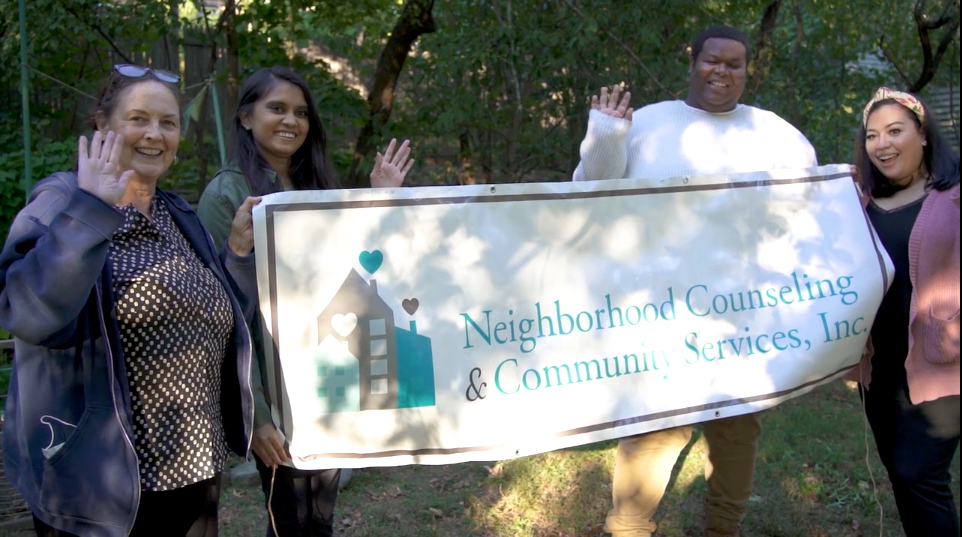
In 2015, it was as if a tsunami had hit the mental health communities of Greater Boston. All across the city, neighborhoods were struggling to find support due to the rising number of mental health practitioners who no longer accepted private health insurance and the closing of numerous community mental health centers, such as Somerville’s The Family Center.
“My fellow Family Center colleagues and I saw the need to fill the gap in mental health service providers,” explains Julie Catalano, cofounder of Neighborhood Counseling and Community Services (NCCS), “and although we certainly didn’t know how to address the need, we wanted to try.”
Julie has served as a part-time NCCS counselor since the organization was founded in 2015. With a staff of five clinicians, NCCS provides low- and no-cost community-based mental health counseling in multiple languages for ages 16 and up, both in-person and virtually, in group settings or one-on-one. NCCS also relies on three student intern clinicians from Cambridge College and other schools.
This September, NCCS hired Ajit Baid as its first paid, part-time executive director. “What is so enticing and attractive to me about NCCS, is the opportunity to be able to help those who struggle with a mental health disorder such as anxiety or depression,” Baid says. “Having worked in healthcare all my life, I’ve seen the human impact these mental health issues have had on people’s lives.”’
Both Julie and Ajit recognize the challenges most individuals face in finding mental health counseling services, but for people who are immigrants, under-insured, or uninsured, organizations like NCCS are truly a lifeline. One student from an immigrant family was depressed and not attending high school. His NCCS counselor “was able to get him back into school, interested in classes, and making connections with other students. He became part of the community and is now pursuing a trade,” Julie reported. Another student who’d shown no interest in school, gained the confidence to pursue higher education after working with a NCCS counselor.
NCCS earns revenue for their mental health counsel through a combination of fees for service and health insurance reimbursements, as well as contracts with various local schools and agencies. For the past several years, NCCS has operated out of a small, one-room space behind a local coffee shop outside of Davis Square. In addition to their regular mental health counseling, NCCS clinicians recently started offering case management services (e.g., SNAP support, housing applications) to their clients, which have been well-received. NCCS clinicians, however, are rarely paid for providing these services, despite being viewed as an essential component to their clients’ mental health treatment plans.
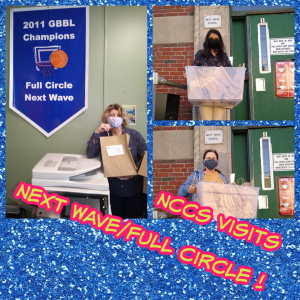
Now with Baid leading the organization, NCCS has a new three-year strategic plan in place to solidify its niche as a local mental health provider. “It’s our vision to transform NCCS into a multi-service, mental health counseling, clinic and community wellness center,” explains Ajit. “It is important that we don’t limit our work to just providing mental health counseling, but add critical wraparound services, if we want to have a positive, long-time impact with the clients we see.” But in order for NCCS to realize its vision, it first must raise additional monies to bring Ajit on full-time, to hire an administrative assistant, and to be able to expand their clinical staff.
Currently, NCCS serves approximately 100 clients through in-person and virtual counseling. Their reach is limited due to their smaller staff and inability to secure more seasoned, licensed clinicians, especially those with varied language capacity. Ajit aims to double the organization’s impact by next year, serving over 200 people, and is currently exploring new partnerships and funding opportunities. Recently, NCCS entered into a partnership with Y2Y Harvard Square, a student-run shelter for LGBTQ-identifying young adults (18-24 years old) experiencing homelessness.
Next year, Neighborhood Counseling and Community Services will host a party to celebrate its 10th anniversary. “When we started NCCS, we really didn’t know what running a nonprofit would involve,” Julie admits. “Our focus was to create a place for everyone, but we were naïve about how that was going to happen and what that really involved. Maybe that was a good thing.”
2026 also marks NCCS’ fifth and final year as a grantee partner of The Lenny Zakim Fund, “LZF has really helped us understand what it means to build an organization,” Julie explains. “At the beginning I would attend the seminars about strategic planning, board development, budgeting, and finance. I would understand somewhat, but conversations with LZF board members and volunteers Deborah Seidel and Mark Irvings really helped to reinforce the learning and enabled me to implement it at NCCS. Being an LZF grantee partner really helped instill in me the importance of persistence, not giving up.”
With the expansion of venture capital mental health providers into Somerville and Cambridge, and the growth of telehealth providers like BetterHelp, NCCS is working to solidify their niche. Julie shared that she believes NCCS has a significant advantage over other larger providers: “We know and care about the members of Somerville and the neighboring communities, because we live in those communities and know how to connect people to the resources they need.”
————————-
Neighborhood Counseling and Community Services is currently looking for free or inexpensive office space in Somerville or Cambridge, preferably in Porter Square or Davis Square, that is large enough for 2 offices/rooms for NCCS staff to serve more clients. If you would like to learn more or get involved, please contact Ajit Baid at ajit.baid@nccsinc.org or visit the NCCS website contact page.