
Thirteen years ago, a group of Lawrence residents gathered in a living room to discuss a recently published article which referred to Lawrence as the ‘City of the Damned.’ The group was frustrated with this characterization from outside media sources who looked down on the beautiful and strong community they called home. These outside groups offered no support to the city of Lawrence or the groups working to uplift the city, choosing instead to pass judgement from afar. One of these residents was Dr. Stacy Seward, who went on to co-found The Dream Network with a collective of her peers. Co-leading the organization inspired her to pursue and complete her Ph.D. in order to better equip the organization to share and create knowledge with those around them. Reflecting on her mindset at that time, Stacy shared, “Nobody is coming to save us. It is up to us to reclaim these narratives and think about how we best serve our communities.”
Formerly established in 2013, The Dream Network works to “develop transformative processes that measurably impact poverty and to shift culture by addressing systemic inequities in our educational, economic, environmental, social, and carceral systems.” The organization is run by a diverse team of Lawrence residents, primarily with Caribbean roots. As described on their website, “Our group varies in age, gender, ability, LGBTQ+ identity, and education. Some of us have been provided with access to advanced degrees while others have been caught in the school to prison pipeline.” The team is continuously collectively growing; as they know each member of the team has something unique and valuable to bring to TDN’s work.
While the organization has grown both in size and in breadth of programming over these last thirteen years, their two main priorities have remained constant: justice-based advocacy and social equity. The Dream Network recognizes that the challenges their community members are facing are interconnected with the root causes of injustice, meaning there is not one path forward. This work is incredibly intersectional, the team serves individuals from all walks of life who are being impacted by racist, sexist, xenophobic, homophobic, and transphobic systems. One piece of their work is their continued partnership with returning citizens to develop job skills, maintain living-wage employment, achieve career success, and build community outside of the carceral system. This includes historic partnerships with other local organizations including the Massachusetts Workforce Investment Board who provides mentorship and job coaching to returning citizens and Second Chance Cars who provide working people in need with affordable vehicles, which drastically increases workers’ ability to achieve and maintain employment.
When asked about their reentry work, Stacy reflected on the strengths of the individuals the team has worked with. In spite of the systemic adversities they have faced, these individuals returning home had strengths to offer their communities.With the support of organizations like The Dream Network, they were able to cultivate their own growth and share their gifts with their community. Stacy shared, “[Many individuals] are now a part of our organization giving back, running their own businesses, hiring people who themselves are coming out of incarceration… We’ve had multiple full circle moments with folks who have worked with us, received benefits from us, and are now working with us as volunteers to give back to other people.”
In all educational events hosted by the organization, the team positions themselves as co-learners, rather than as teachers.The Dream Network hosts both virtual and in person workshops and community events which facilitate a space for attendees to process the surrounding oppressive systems and engage in dialogue on how communities can develop their skills to confront racial inequities. Above all, The Dream Network prioritizes creating a safe and welcome place for their community to discuss the realities of their lives and to find solidarity with each other. Stacy reflected, “We are thinking about these things [through an intersectional lens], and we’re bringing those thoughts and conversations in a place that we hope to be safe, that we hope to be protected. We hope [our programming] at least provides some sense of comfort in our daily lives that are getting increasingly difficult.”
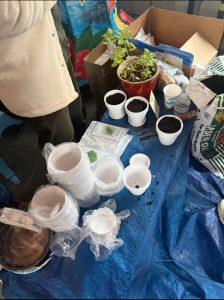
Alongside their longstanding reentry and education efforts, the organization is dedicated to uplifting community-led social justice initiatives and local organizing efforts particularly surrounding environmental justice, and educational inequities. In the aftermath of the 2018 Merrimack Valley gas explosions, the organization committed to prioritizing ‘a healthy Lawrence’ and engaging deeper in climate activism spaces. Stacy described the realities of that time, detailing the widespread displacement of entire neighborhoods. For multiple months residents faced unsafe conditions in their own homes; “folks were being carted from as far away as Waltham to work and to school.” The Dream Network works to make sure massive issues impacting their community’s wellbeing and quality of life cannot be swept under the rug and ignored, as the residents of Lawrence and their neighboring communities deserve to have their voices heard about the real issues impacting their lives, and
The Dream Network is also particularly involved with initiatives working to promote quality education in Lawrence schools, increase educational funding from the state, grow community-presence in school boards and committees, and challenge the school-to-prison pipeline. In all their organizing efforts, the team prioritizes intergenerational opportunities and connection, ensuring that local young folks have the opportunity to advocate for themselves, their education, and their communities. Recently, Stacy sat on a panel with a young person who was involved with The Dream Network’s grassroots work years ago, participating in door-knocking and in school activism. This young activist has now become a school committee member, taking over Stacy’s seat on the committee. “ “When this young person approached me and said, ‘I’m thinking about running. I don’t want to be disrespectful.’ I [responded and said], ‘don’t only think about it. I think you should run. I will not run, but I will support you in your run.’” She expanded on the importance of passing the baton to younger generations and supporting them in their pursuit of leadership positions. It is through this type of intergenerational connection and support that power-hoarding cycles are broken and communities are able to grow and change with the passing years.
With each day, it feels as if there are new challenges facing Lawrence and other small communities all over Massachusetts, but through these challenges, organizations like The Dream Network remain committed to doing the work, and to taking care of their people. Through their thirteen years, the organization has had to continuously evolve, shift their priorities, and adapt to the growing threats facing vulnerable communities. But through it all, their community has held strong. This work is “convoluted, it’s complicated,” Stacy made clear, “but what’s most important to me is that folks are staying with us. Some of the folks we were working with 10, 12 years ago are still with us, [and are now able] to share their wisdom and their lived experience with others… as we all climb together.”
__________________________________________________________________
Learn more about The Dream Network’s work on their website. For more information about their programming and how to get involved in their work, reach out to their team at (978)494-0706 or info@thedreamnetwork.org.